Hotjar alternatives in 2026
Updated
Hotjar is often used for heatmaps, session recordings, surveys, and feedback, but it is not the only option for understanding what happens on a website. The right alternative depends on whether you need user behavior analytics, product debugging context, team feedback workflows, or a mix of all three.
What to look for
- Session replay, heatmaps, and feedback coverage
- Privacy, consent, and data retention controls
- Developer context such as console and network data
- Integrations with issue trackers and product workflows
- Pricing fit for your traffic volume and team size
1. Vynix (our pick for context and AI handoff)
Best for: teams that want visual feedback with developer context and an AI diagnosis that hands work to a coding agent.
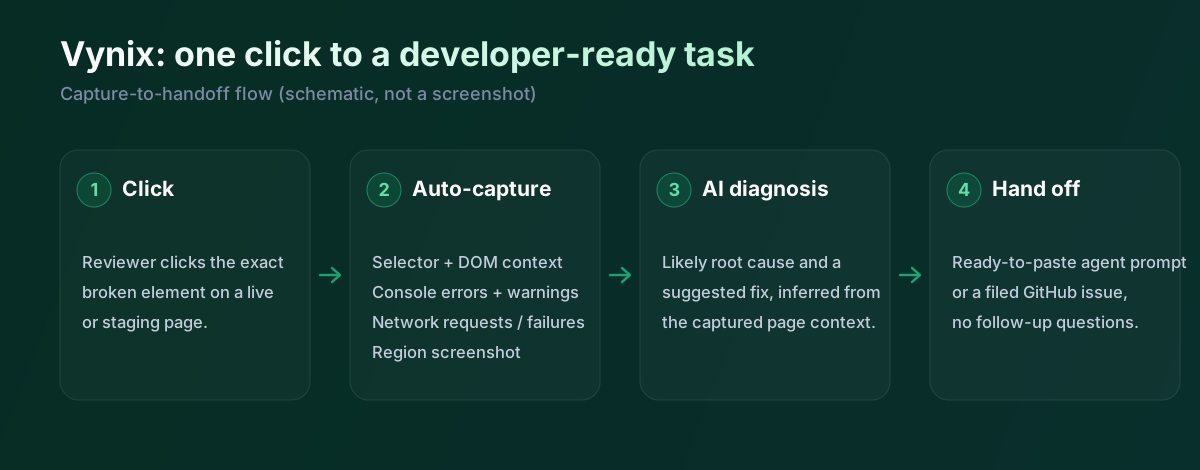
Vynix fits best when the goal is to turn website feedback into developer-ready context, not to replace a full behavior analytics suite. It lets teams click on a broken or confusing element, capture the screenshot, element details, console and network context, and use that to create a prompt or GitHub issue. It can sit alongside analytics tools when product, QA, or support teams need clearer handoff to engineering.
Try Vynix free
2. Mouseflow
Best for: marketers and CRO teams diagnosing drop-off with heatmaps and funnels.
Mouseflow combines session replay, heatmaps, funnels, and form analytics so teams can find where visitors hesitate or abandon. It is geared toward conversion optimisation. Its outputs are behavioural insights for marketers, not structured bug reports for engineers.
3. Smartlook
Best for: web and mobile teams that want recordings and heatmaps without heavy setup.
Smartlook offers session recordings, heatmaps, and event tracking for both web and mobile, helping teams see how users move through a product. It is an accessible, analytics-style tool for spotting UX issues. Like other replay tools, it shows what users did rather than turning a pinpointed note into developer-ready context. One thing worth knowing: Smartlook is being wound down, with new sales ended and the platform due to be decommissioned in September 2027.
4. FullStory
Best for: product and experience teams analysing digital behaviour at scale.
FullStory records and indexes user sessions so teams can search behaviour, quantify friction, and replay exactly what a user experienced. It is strong for digital experience analytics and funnel analysis. It is built around behavioural data, not around a person filing a single, fixable bug report with technical context.
5. LogRocket
Best for: front-end teams that want session replay tied to errors and performance data.
LogRocket records user sessions and pairs the replay with console, network, and performance data, so teams can watch exactly what happened before an error. It helps reproduce tricky front-end issues without a written report. The workflow centres on replaying sessions rather than capturing one pinpointed note with an AI diagnosis.
How we keep this honest
We checked each tool against its own site and docs on 18 July 2026, and we only describe what a tool does natively. Some of these have shipped AI and MCP features recently, so we've tried to reflect that rather than pretend Vynix is the only one moving. If something here has drifted out of date, tell us and we'll fix it.
- Mouseflow - mouseflow.com/features
- Smartlook (end-of-sale notice) - smartlook.com/features
- FullStory - fullstory.com/platform
- LogRocket - logrocket.com
- Vynix widget capture and MCP handoff - checked against product docs
Frequently asked questions
- What is the best Hotjar alternative in 2026?
- There is no single best choice for every team. Mouseflow and Smartlook are closer fits for teams looking for behavior analytics, FullStory and LogRocket are often considered for deeper digital experience or session debugging needs, and Vynix is useful when feedback needs to become developer-ready issue context.
- What should I look for in a Hotjar alternative?
- Start with the job you need done. If you need conversion research, look for heatmaps, recordings, funnels, and feedback tools. If you need to fix bugs faster, prioritize console logs, network context, issue tracker integrations, and workflows that help developers reproduce the problem.
- Can I use more than one Hotjar alternative?
- Yes. Many teams use one tool for understanding user behavior and another for bug reporting or developer handoff. The main things to watch are privacy settings, overlapping scripts, data retention, and whether the combined cost still makes sense.